Friday, February 3, 2012

The Voice™ New Testament

the voice nt

The Voice™ New Testament is a new dynamic translation that attempts a '... retelling [of] the story of the Bible in a form as fluid as modern literary works, yet remaining painstakingly true to the original Greek, Hebrew, and Aramaic texts.'

Most of the text is in a standard font, however the translation follows the practice of italicising words that are not connected to the dynamic translation of the original text. One unique feature of this translation is the inclusion of material in the flow of the text, delineated by horizontal lines, that expand on the themes of the passage being read. Another unique feature is the use of a "screenplay" format where dialogue occurs. This has two effects: it makes dialogue clearer to follow and also "cleans up" the text of '... endless repetition of conjunctions, articles, and certain verbs.'

Unlike most translations which rely primarily on language scholars, The Voice™ New Testament has also included a group of modern writers, musicians and poets to ensure beauty as well as accuracy in the translation. The group of translators and "artists" have attempted to maintain the unique "voice" of individual book authors rather than a flat style throughout.

The front matter of The Voice™ New Testament has a very helpful discussion of the translation process and some of its challenges. There is also a discussion of the Greek word Christos, usually transliterated as Christ, which has been rendered throughout the New Testament as the Anointed or the Anointed One in the belief that these terms convey the meaning of the title of Christ rather than it being mistakenly understood by readers to be part of the name of Jesus. An explanatory phrase, the Liberating King, has also been added at times to '... remind us of the primary mission and of the reason God elects and empowers Jesus in the first place.'

The front matter also includes four different reading plans of the New Testament for Advent, Lent and Easter,  reading the New Testament in 24 weeks, and a series of readings entitled 40 Days with God. There is also an introduction to the New Testament using covenant theology as a framework for understanding.

Let me say up front that I am not a language scholar and my review is based on reading the front matter and the letters of Paul to the Romans and Galatians - my two favourite books of the New Testament. I have mixed feelings about this translation. There is a certain freshness in most new translations due to the variations of phrasing from what one is used to. The screenplay dialogue is also interesting and definitely makes the to-and-fro of speakers easy to follow – particularly in the gospels and the book of Acts. So there is certainly value in this new version of the New Testament. The thematic expansions, while they are delineated by lines before and after, do tend to break up the flow of the text and I think they would have been better included as notes at the bottom of the page or end of the chapter. On the other hand, including them in the flow of the text was useful as I read the text on my Kindle and it meant not having to jump back and forth using links to read this material.

My greatest concern about this translation is the inserted italicised material. While the italicisation does indicate that this material is not derived from the original text, I think much of it is unnecessary and is sometimes biased toward a particular interpretation of the text. For example, Romans 16:3, in the New American Standard Bible ( very literal translation), reads:

Greet Priscilla and Aquila, my fellow workers in Christ Jesus...

The Voice™ New Testament reads:

Give my best to Priscilla and Aquila; they are not only my colleagues in my profession of tent making, but more importantly they are my fellow servants of Jesus the Anointed. (italics in original)

Notice, in the italicised section, a completely unwarranted statement that Priscilla and Aquila are colleagues in tent making. In other words, the suggestion is that they are not equal workers in the pastoral work that Paul does. Compare this with some other translations:

Greet Prisca and Aquila, who work with me in Christ Jesus ... (New Revised Standard Version)

Greet Prisca and Aquila, my fellow workers in Christ Jesus ... (English Standard Version)

Give my greetings to Prisca and Aquila, my coworkers in Christ Jesus ... (Holman Christian Standard Bible)

One has to wonder whether the translators/editors of The Voice™ New Testament are trying to avoid any suggestion that women can be equal partners in ministerial/pastoral work by inserting this extra material. While this is only one example, there are frequent interpolations of the text which, in my view, should be left out as they are not derived from the original material.

Overall, I think The Voice™ New Testament is an interesting new addition to bible translations. But, as with all translations, there are advantages and disadvantages. None are perfect. The more translations a Bible student uses the better as comparison helps to maintain some objectivity about what is certain and what is not in any one translation. So, it is a worthy addition to one's library and provides yet another perspective and enrichment of the biblical material and its meaning.

Buy the The Voice New Testament: Revised & Updated'.


Disclosure of Material Connection: I received this book free from the publisher through the BookSneeze®.com ; book review bloggers program. I was not required to write a positive review. The opinions I have expressed are my own. I am disclosing this in accordance with the Federal Trade Commission’s 16 CFR, Part 255 : “Guides Concerning the Use of Endorsements and Testimonials in Advertising.”

Saturday, December 24, 2011

Book Review: Heaven is For Real

Heaven is for real

Right up front, let me say that I think Todd Burpo’s book Heaven is for Real: A Little Boy's Astounding Story of His Trip to Heaven and Back is one of the most naive, superficial, and disturbing “Christian” books I’ve read for a long time.

In brief, the book purports to tell of a 4 year old’s journey to heaven during a surgical procedure for a severe ruptured appendix. Following the procedure, and over a period of months and years, Colton, Todd’s son, gradually “revealed” bits and pieces of his alleged journey to heaven. Here’s what he “discovered” and/or “experienced” on his journey:

  • angels sang to him while he was in hospital
  • he was sitting on Jesus’ lap while he was in heaven
  • while in heaven, he saw his father praying in a small room in the hospital and his mother in a different room talking on the phone and praying
  • he met John the Baptist in heaven
  • Jesus has a rainbow coloured horse and wears a golden crown with a pink diamond
  • he was given “homework” to do in heaven while he was being cared for by his deceased grandfather – Pop
  • everyone in heaven has wings and flies around from place to place – except for Jesus who who levitates up and down like an elevator
  • everyone in heaven has a light above their heads (Todd Burpo interprets this in the book as a halo)
  • God is ‘really, really big’ and is so big he holds the world in his hands
  • Jesus sits at the right hand of God, Gabriel sits on God’s left, and the Holy Spirit is “kind of blue” and sits somewhere in the vicinity of the other three.
  • the gates of heave are made of gold and pearls
  • after Colton’s return to earth, he became obsessed with rainbows because of the incredible number of colours he saw in heaven
  • at times, following his return from heaven, Colton saw ‘power shot down from heaven’ while his dad was preaching
  • there are swords  and bows and arrows in heaven that the angels use to keep Satan out of heaven
  • the weaponry described above will apparently be used in a coming battle that destroys the world – and Colton’s dad will be fighting in that battle
  • the final battle will be against actual dragons and monsters while the women and children stand and watch the men fighting them
  • he meets ‘a sister’ in heaven – who was lost through miscarriage by the mother years before – and which the parents claim they never spoke to Colton about
  • he claimed to see Satan in heaven but wouldn’t say what he looked like
  • and he described what Jesus looked like, comparing people’s ideas of Jesus in their artworks as not right, until he was shown a painting of Christ by Akiane Kramarik which he said got the picture of Jesus right

There are a few more “revelations” in the book, but these are the essential ones. And all this was discovered in 3 minutes in heaven!

There are a number of reasons one should be highly sceptical of this book. Firstly, Colton was just 4 years old when he began to talk about his experience mostly prompted by his father – except for the first of his comments about the angels singing to him when he was having his surgery. Four year old children are renowned for making up stories and not being able, at this age, to distinguish fantasy from reality. After all, many children have imaginary friends and use their imagination constantly in making up stories while engaging in play. It would seem that the parents are still thinking like four year olds if they take what their kid says as literally true!

Secondly, why so many months and years for the story to develop – with the prompting of the parents? Surely if a child visited heaven they’d come back and be talking about it excitedly all at once – at least to start with. Haven’t we all heard children bubble over with enthusiasm after having an exciting experience? Not Colton. He doesn’t even mention it until he happens to say something about where his parents were during his operation. But given that it takes years for his whole “story” to come out, one has to wonder how much of it was constructed in response to his father’s questioning.

Thirdly, the “information” provided by Colton is so obviously consistent with an evangelical fundamentalist view that it is not hard to see it has being informed by this culture as he grew up. Colton’s father is a pastor and he admits to reading Bible stories to Colton as he grew up. He would have attended Sunday School and  been exposed to all the detail he has described even if unconsciously. It’s not surprising that his description of heaven draws on that culture.

Fourthly, Colton’s father holds to a literalist reading of the biblical Book of Revelation which most people quite rightly understand to be highly symbolic and figurative. Colton describes things like swords and horses (rainbow coloured, no less, obviously similar to the children’s Rainbow Brite toy!) in heaven and his father believes they are truly in heaven because verses in Revelation confirm it! So does Colton’s father believe there is really a slain lamb/lion creature actually there too?

Fifthly, if Colton’s descriptions of God on thrones with angels using swords to keep Satan out of heaven are to be taken literally, then God has been caught in an Old Testament era time warp. Are they really suggesting that God has eternally sat on thrones, ridden horses, fought with swords against real dragons? Most biblical scholars (and most Christians) would have a much more mature view of these issues than the childish view that Colton and his parents have. But then, of course, according to this book, we are to become like little children in our faith and just accept all this stuff without question.

Finally, the idea that Colton has told them a few things that he just couldn’t have known about is highly unlikely. Church communities are renowned gossiping communities and it is much more reasonable to assume that he heard some of these things than to believe they are supernaturally revealed.

There’s a lot more that could be said about this book. But the above will do. Heaven is for Real is simplistic, superficial, and naive. The most disturbing thing about this book is that it has become so popular – which doesn’t say much for the people that swallow it whole without a second thought – even to the extent of stating that they have had their faith strengthened by it. If this is all it takes to reaffirm faith then, to my mind, that faith is pretty fickle.


Disclosure of Material Connection: I received this book free from the publisher through the BookSneeze®.com <http://BookSneeze®.com> book review bloggers program. I was not required to write a positive review. The opinions I have expressed are my own. I am disclosing this in accordance with the Federal Trade Commission’s 16 CFR, Part 255 <http://www.access.gpo.gov/nara/cfr/waisidx_03/16cfr255_03.html> : “Guides Concerning the Use of Endorsements and Testimonials in Advertising.”

Monday, November 28, 2011

Book Review: Surprised by Oxford

I was pleasantly surprised by Carolyn Weber's memoir Surprised by Oxford. I enjoyed it to such a degree that I had to keep reading. Carolyn, who comes from a loving but broken home and is highly averse to religion, heads to Oxford to study literature. While there, she meets all sorts of wonderful (and not so wonderful) people, engages in conversation, and is challenged by what she learns about Christianity from a friend who breaks the stereotypes she has held about believers.

The writing is a bit disjointed at times but the author uses language beautifully and describes Oxford University in ways which made me want to study there. She also shares her gradual and subtle journey from agnosticism towards Christianity. This journey sometimes includes a few cliched responses to questions that are issues for Christians but, on the whole, does not dominate the narrative.

To begin with, I wondered whether my interest could be sustained for over 400 daunting pages. But it was. With evocative descriptions of Oxford, reference to classical writers and poets, delightful turns of phrases, a bit of romance, it makes for a genuinely fresh reading experience. It's the sort of book you can relax with and be carried along on a gentle journey of delightfully meditative reflections. Beautifully honest and insightful.

Click here to learn more at Amazon: Surprised by Oxford: A Memoir


Disclosure of Material Connection: I received this book free from the publisher through the BookSneeze®.com book review bloggers program. I was not required to write a positive review. The opinions I have expressed are my own. I am disclosing this in accordance with the Federal Trade Commission’s 16 CFR, Part 255 : “Guides Concerning the Use of Endorsements and Testimonials in Advertising.”

Saturday, November 26, 2011

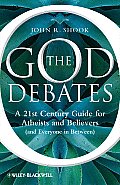
Book Review: The God Debates

John Shook's The God Debates: A 21st Century Guide for Atheists and Believers (and everyone in between) is a stunning addition to the sometimes highly volatile contemporary arguments over God that are so prominent. The author takes a serious in-depth look at just about every argument used by apologists of religion (particularly Christian) and teases them apart, describing how they are constructed, and uncovering the many flaws that make them ineffective.

Shook categorizes arguments for God in the following way:

  • Theology from the scripture - arguments for God based on special revelation and apologetics
  • Theology from the world - arguments for God derived from the natural world, morality, human experience, and human analogy
  • Theology beyond the world - cosmological arguments, teleological arguments, and arguments from the laws of nature
  • Theology in the know - Reformed epistemology, foundationalism
  • Theology into the myst - arguments based in mysticism, relativism, existentialism, and scriptural interpretation
In a section dealing with each of these categories, Shook describes the various arguments and ruthlessly analyses them and evaluates their validity - and most (if not all) of them fall short in terms of their evidence and/or logic. The final chapter presents a summary of where the God debates are now. He describes 12 modern worldviews and presents them in a diagram showing how each relates to the ones next to it and differs radically from those opposite. I've reproduced the diagram here: 

After surveying each of these and their contributions to the relationship to faith and reason - the big question in the God debates - he argues that the best possibilities for the future development of ethical principles will come from humanism - not secular or religious humanism but ethical humanism. Based on reason and experience and without the what Shook sees as the flawed supernaturalism of religious apologetics, Shook sees ethical humanism as the providing the most hope for grounding of morality in a secular culture.

The God Debates is excellent reading and both Christian apologists and atheists will benefit from this comprehensive analysis. Christian apologists will see how inadequate most of the arguments for God's existence are flawed and the challenges they need to meet if they are going to be persuasive - a very difficult task indeed. And atheists will see a model of scholarly dialogue that avoids the emotive rhetoric of the so-called "New Atheists". They will also gain a deeper understanding of the structure of religious apologetics.

The God Debates is must reading for thinking Christians and thinking atheists. It sets a standard for future dialogue around the existence and nature of God and the role of faith and reason in developing a moral framework for those who do not believe in a supernatural being. It will be challenging for both - but, in particular, Christians (and other religions) are going to have to work very hard to sustain a belief in God in the face of this author's critique. I'll be looking forward to the responses of Christian apologists to this one!

Sunday, November 20, 2011

Let's Pretend

If I may, I’d like to play a game of “Let’s Pretend”.

It is a game I like to play with various ideas just to see what would change with my faith or my paradigms if some normally accepted “givens” were removed.

If:
  • ·         Jesus was not a full 1/3 of the deity, but was completely human in every way
  •       Jesus was not born of a “virgin” and angels, stars, magi did not form part of his birth   experience.
  • ·         the miracles are more about symbolic truth than descriptions of real events
  • ·         his death was not required as a “propitiation” for our sins
  • ·         he did not physically rise on the third day

If all those things were true, then what? What are we left with?

Maybe these things:

  • ·         An extraordinary, perhaps unique man, who drew upon the collective wisdom of the Jewish faith and understood the connections of truth which had been slipping past for generations; that God was a servant God; that release of the captives, recovery of sight, release from poverty were an integral part of who God is.
  • ·         Someone who understood what God actually wanted from people;  

          “And what does the LORD require of you?
          To act justly and to love mercy
          and to walk humbly with your God.” – Micah 6:

         Or in Matthew 22: 

        “Teacher, which is the greatest commandment in the Law?”
         Jesus replied: “‘Love the Lord your God with all your heart and with all your soul and with all
         your mind.’  This is the first and greatest commandment.  And the second is like it: ‘Love
         your neighbour as yourself.’ All the Law and the Prophets hang on these two 
         commandments.”
  • ·         Someone who, when he declared forgiveness of sins did not declare it for the future (after he had paid the price, been the sacrifice, been raised from the dead and you have accepted him into your heart as personal saviour and Lord)

o   Matthew 9: 1-8 “My Son, Your Sins Are Forgiven”
o   Mark 2:1-12

He declared it as a truth.  The religious legal eagles became all bent out of shape when he said this and demanded to know how he could forgive sins. How about this; what if he wasn’t forgiving sins; he was just declaring the truth that their sins were forgiven?
  • ·         Someone who declared the current and ongoing presence of the Kingdom of God, where intimacy with the Almighty was not an event to prepare for in the hereafter, but a immediate and eternal reality.
  • ·         Someone who, with the story of the Prodigal Son, showed that God did not require a formula, a sacrifice or a ritual in order to want fellowship and a welcoming embrace. All that was required was for us to turn our face towards home and God would be sprinting towards us.


If those things were true, where would we be then?

  • ·         I would know that I live in a world where I am loved by a loving God, where I am invited to participate with that God in the healing and fulfilment of creation.
  • ·         I would know that forgiveness of my sins is not something occupying God’s heart
  • ·         I would know that God’s love for me is unconditional
  • ·         I would know that to participate in the Kingdom I need to keep my face turned towards God and to work in the areas close to God’s heart; to relieve the suffering and oppression of those around me.
  • ·         I would know that I can live now, right now, in the everlasting presence of the eternal God and trust any and all futures to Him


For these reasons and others besides, I tend to feel great freedom when theological issues are discussed. If anyone can walk up to me and scientifically prove that there was no Virgin Birth or that they have complete proof that they have discovered the bones of Jesus, it doesn't change my faith or the reality of my relationship with God in even the smallest way.

I believe that Jesus was focussed on his relationship with the Father and that this was what he wanted for everyone else. I really don’t think he wanted to be the “centre of it all.”


Tuesday, November 8, 2011

The Gathering

At the top of the South Island there is a little strip of land called Golden Bay, beloved by many as a summer holiday destination. 

It is the land of the aging hippie, the homespun wool, new age environmentalists, artists and generally cool people.

Most people travel there via the road over the Takaka Hill, a wonderful limestone/marble mountain covered in weird rock formations and astounding holes. 

Over the summer the road it is sometimes almost bumper to bumper. It is the only sealed road into and out of Golden Bay.

Most people end up congregating in a few spots – Totaranui, Takaka etc – and meeting up with their neighbours from Christchurch. Often this is a planned gathering – to get together with old friends and share a few meals and some relaxed time.

One of the questions often asked when meeting a friend is “How was the trip over the hill?” If you ever heard the reply “We didn’t come over the hill” it would initially be met with something akin to disbelief, until the thought processes kicked in.

  • ·         Perhaps they came in by ferry.
  • ·         Perhaps they arrived by helicopter
  • ·         Maybe they kayaked in
  • ·         They could have walked across
  • ·         They could have mountain biked or motor biked cross country

When you get right down to it there are heaps of ways to get to Golden Bay. It is just less common to arrive in those ways. Perhaps some of the journeys they took may even have been more fun than the one we took.

The key is that, whichever way we chose to get to Golden Bay, one way or another we all arrived for our gathering together. The path wasn’t the objective. I can’t judge whose path was the better one. The objective was to be together at “The gathering” (a little South Island, Golden Bay reference there).

In the Good Shepherd tale Jesus speaks of being the “gate” and the “shepherd”. He says the gate will open and the sheep will be called out by name into the waiting pasture. The pen is not the destination; the gate is not the destination; the shepherd is not the destination. The pasture is the destination.

Sometimes I think we spend a great dealing of time worrying about whether people have walked through the right gate; maybe even confusing the gate with the pasture.

“ I'm sorry, but I’m afraid that you simply can’t be in Golden Bay. You didn’t arrive by the road. I know it may seem like Golden Bay to you and, strangely, I also feel as if I can see you here, but I must be mistaken. There is after all only one road and, if you have not taken that road, then you are not here.”

Friday, November 4, 2011

Book Review: God Without Religion

Andrew Farley has followed up his previous book, The Naked Gospel, with another brilliant turn in God Without Religion. Farley has the gift of making profound things simple - and nothing is more in need of simplifying than religious teaching about the gospel that persists in keeping Christians in bondage.

The central point of God Without Religion is that Christians now live under the New Covenant which has jettisoned the Mosaic Law and replaced it with a new ethical foundation in the gospel of grace soaked in the power of the Holy Spirit. For Farley, many Christians have not grasped the freedom they have in Christ. They are bound up (the original meaning of the term from which religion is derived) in the oppressive belief that the have to keep the at least some of the Old Testament laws.

Of course, many will object to this message of grace plus nothing and frequently appeal to NT passages about behavior, law, and obedience. But one of Farley's gifts is to exegete Scripture and he looks at these common passages, teasing out there actual meaning in their literary and historical contexts. His explanations are clear, simple, and penetrating and I often sat breathless as I wondered why I hadn't seen these things before.

If you are living a religion that insists on defining rules or laws for you that you must live by then you must read this book. St Paul, in Galatians 5, provocatively drives home the fact that the whole point of Christ's ministry was to bring freedom. And the only way to live as a Christian is to live by the Spirit - not by being lashed to the Mosaic Law. As Farley points out, the law can only provoke us to sin. It was never intended as a tool for Christians to live their lives by. The fruits of the Spirit (love, joy, peace, and so on) are produced in us quite separate from law.

God Without Religion is a stunning second book from Farley. He uses analogies and stories to good effect; he makes the Bible come alive; and he makes controversial issues, that have plagued the church, practical and relevant. Get this book without delay and come to know God without religion.

Book details: Farley, Andrew (2011). God Without Religion. Baker Books.